
NRI Marriage Fraud – Legal Remedies in India

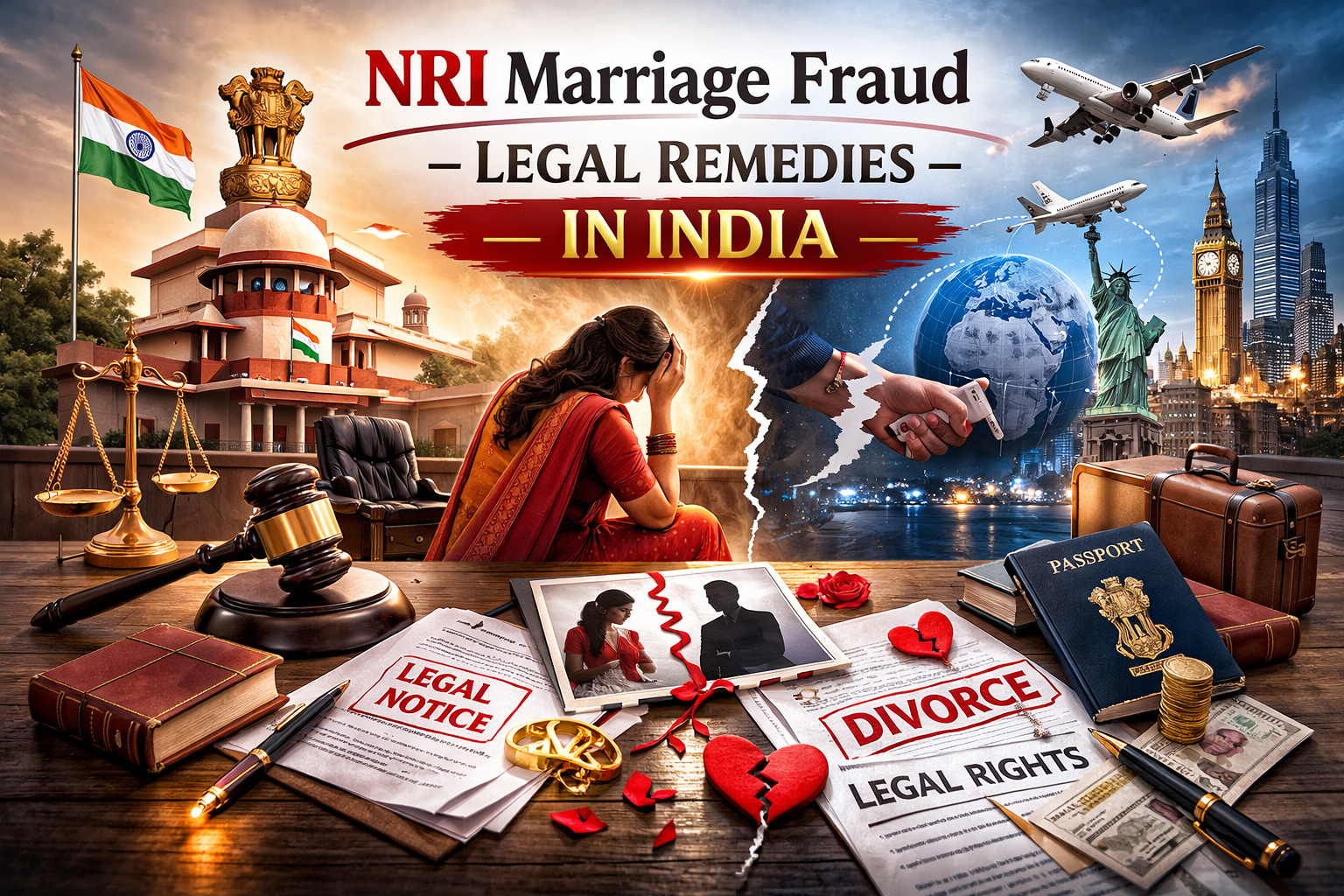
NRI marriages often carry the promise of better opportunities and a global lifestyle. However, in some cases, these marriages turn into distressing experiences due to fraud, misrepresentation, or abandonment.
From sudden disappearance after marriage to refusal of financial support, victims are often left navigating emotional and legal challenges across borders. Understanding the legal framework in India can help individuals respond in an informed and structured manner.
What is NRI Marriage Fraud?
NRI marriage fraud refers to situations where one spouse, typically residing abroad, deceives the other either before or after marriage. This may include providing false information about employment, hiding previous marital status, or abandoning the spouse after marriage.
Unlike regular matrimonial disputes, NRI-related cases often involve multiple jurisdictions, making legal proceedings more complicated.
Common Forms of NRI Marriage Fraud
1. Misrepresentation of Facts
In many cases, one partner may provide false details regarding income, job status, or immigration status. There may also be concealment of an existing marriage or ongoing relationship.
2. Abandonment After Marriage
A common issue involves the NRI spouse leaving the country shortly after marriage and cutting off communication, leaving the other partner without support.
3. Financial Exploitation
Some cases involve demands for money, expensive gifts, or misuse of financial resources under false pretenses.
4. Parallel Relationships
There have been instances where the NRI spouse is already married abroad or involved in another relationship, which is concealed from the partner in India.
Legal Remedies Available in India
1. Filing a Police Complaint
A complaint can be filed under relevant provisions of law for cheating, cruelty, or breach of trust. This is often the first step in initiating legal action.
2. Registration of FIR
In serious cases, an FIR may be lodged, leading to a formal investigation. Courts may issue notices or further directions depending on the facts of the case.
3. Maintenance and Financial Relief
The affected spouse can seek maintenance through Indian courts, even if the other party resides abroad. This ensures some level of financial security.
4. Divorce Proceedings in India
Divorce can be initiated in India if jurisdictional conditions are met. Courts may proceed with the case even if the other party is not present, subject to legal procedures.
5. Action Against Passport and Travel
In certain situations, authorities may take steps related to passport impoundment or issue alerts to monitor the movement of the accused.
6. Government Support Mechanisms
Victims may approach organizations such as the Ministry of External Affairs and the National Commission for Women for assistance in cross-border disputes and grievance redressal.
Challenges in NRI Marriage Fraud Cases
NRI marriage disputes often come with unique challenges:
-
Legal jurisdiction across countries
-
Difficulty in serving notices abroad
-
Delays due to international legal procedures
-
Limited cooperation from the accused spouse
These factors can make the process time-consuming, requiring patience and proper legal guidance.
Important Documents to Maintain
Proper documentation plays a crucial role in strengthening a case. Some essential documents include:
-
Marriage certificate
-
Communication records such as emails and chats
-
Proof of spouse’s residence and employment abroad
-
Financial transaction records
Keeping these documents organized can significantly support legal proceedings.
Preventive Measures Before NRI Marriage
Taking precautions before entering into an NRI marriage can help avoid potential disputes:
-
Verify employment and immigration status through reliable sources
-
Confirm marital status with official documents
-
Avoid making large financial commitments without clarity
-
Ensure the marriage is legally registered
Awareness and due diligence can reduce the risk of fraud.
Conclusion
NRI marriage fraud cases can be complex due to the involvement of international elements, but Indian law provides multiple remedies to address such issues. Timely action, proper documentation, and awareness of legal rights can help individuals navigate these situations more effectively.
While the process may take time, understanding the available legal framework is an important step toward resolving disputes in a structured and lawful manner.
Written by Adv. Aman Chawla, practising in Delhi, focuses on matrimonial and family law matters.