
Written by Adv. Aman Chawla | Matrimonial Law Specialist | Delhi High Court & Supreme Court of India 8 Years Exclusive Practice in Family & Matrimonial Law | Jangpura, New Delhi
When one spouse wants out of a marriage and the other refuses, the law provides a path forward — but it is rarely a short or simple one. Contested divorce is among the most demanding legal proceedings a person can go through: emotionally draining, financially taxing, and procedurally complex. Yet when a marriage has genuinely broken down, pursuing it is often the only meaningful option.
In over eight years of exclusive matrimonial law practice before the Delhi High Court and the Supreme Court of India, I have represented clients on every side of a contested divorce — petitioners, respondents, spouses seeking custody, spouses fighting to keep their children. The one thing I tell every client at the first consultation is this: understanding the process is the first step to surviving it.
This guide covers everything you need to know about contested divorce in India in 2026 — the legal grounds, the step-by-step court process, realistic timelines, the evidence that matters, the costs involved, and the mistakes that cost people years.
What Is Contested Divorce, and How Does It Differ from Mutual Divorce?
A contested divorce is a divorce where one spouse files a petition for dissolution of marriage that the other spouse either opposes, ignores, or refuses to consent to. The court must then examine the facts, hear both sides, and decide whether the legal grounds for divorce have been established.
This is fundamentally different from a mutual consent divorce, where both parties agree to separate and jointly approach the court. In a contested divorce, there is a plaintiff (the petitioner) and a defendant (the respondent). Evidence is filed. Witnesses are examined. Lawyers argue across a courtroom. The judge decides.
The adversarial nature of contested divorce is what makes it harder — and what makes getting the right legal counsel so important from day one.
Which Law Governs Contested Divorce in India?
India does not have a uniform civil code for divorce. The applicable law depends on the religion of the parties:
- Hindus, Buddhists, Sikhs, Jains — Hindu Marriage Act, 1955 (Section 13)
- Muslims — Muslim Personal Law (Application) Act, 1937 / Dissolution of Muslim Marriages Act, 1939 (for wives)
- Christians — Indian Divorce Act, 1869
- Parsis — Parsi Marriage and Divorce Act, 1936
- Parties of different religions / civil marriages — Special Marriage Act, 1954 (Section 27)
The grounds for divorce, the procedure, and the timelines vary across these statutes. This guide primarily addresses the Hindu Marriage Act, 1955, which governs the vast majority of contested divorce proceedings in Delhi and across India.
Legal Grounds for Contested Divorce Under the Hindu Marriage Act, 1955
Under Section 13 of the Hindu Marriage Act, a spouse may petition for divorce on the following grounds:
Cruelty
This is the most commonly invoked ground in contested divorce petitions today. Cruelty includes both physical violence — assault, battery, threats — and mental cruelty, which courts have interpreted very broadly.
Mental cruelty can include persistent humiliation, false criminal complaints (such as fabricated 498A cases), continuous neglect, public embarrassment, control and isolation, and behavior that makes it genuinely impossible for the other spouse to cohabit. The Supreme Court has repeatedly held that what constitutes mental cruelty must be assessed in the context of the particular marriage, the personalities involved, and the surrounding circumstances.
Adultery
A petition on the ground of adultery must prove that the respondent had voluntary sexual intercourse with a person other than the petitioner during the subsistence of the marriage. Adultery is difficult to prove directly; courts rely on circumstantial evidence — phone records, hotel bills, photographs, digital communications, and witness testimony.
Importantly, under the current law, adultery is a ground for divorce but is no longer a criminal offence following the Supreme Court’s decision in Joseph Shine v. Union of India (2018).
Desertion
Desertion means the respondent has abandoned the petitioner without consent and without reasonable cause for a continuous period of at least two years immediately before filing the petition. Both the factum of desertion (physical abandonment) and the animus deserendi (intention to abandon permanently) must be proved.
Courts have also recognised “constructive desertion” — where the spouse who remains in the matrimonial home creates conditions so intolerable that the other spouse is effectively forced to leave.
Conversion
If the respondent has converted to another religion, the petitioner may seek divorce on this ground alone, regardless of any other conduct.
Unsoundness of Mind / Mental Disorder
The petitioner may seek divorce if the respondent has been incurably of unsound mind or has been suffering continuously or intermittently from mental disorder of such a kind and extent that the petitioner cannot reasonably be expected to live with the respondent.
Medical evidence, including psychiatric evaluations and treatment records, is essential on this ground.
Leprosy (Virulent and Incurable)
Though rarely invoked in modern practice, divorce on the ground of the respondent suffering from an incurable form of leprosy remains a statutory ground under the Act.
Venereal Disease in a Communicable Form
If the respondent is suffering from venereal disease in a communicable form, the petitioner may file for divorce on this ground.
Renunciation of the World
If the respondent has renounced the world by entering a religious order, the petitioner may seek divorce.
Presumption of Death
Where the respondent has not been heard of as being alive for a period of seven years or more by those who would naturally have heard of the respondent, the petitioner may obtain a decree of divorce.
Additional Grounds Available Only to the Wife
Under Section 13(2) of the Hindu Marriage Act, a wife alone may also petition for divorce on the following grounds:
- Bigamy — if the husband had another wife living at the time of the marriage
- Rape, sodomy, or bestiality — if the husband has been guilty of any of these since the solemnization of the marriage
- Non-resumption of cohabitation after maintenance order — if a decree of maintenance has been passed in the wife’s favour and cohabitation has not been resumed for one year or more
- Repudiation of marriage — if the marriage was solemnized before the wife attained the age of 15 years and she repudiated the marriage before turning 18 (the “option of puberty”)
Step-by-Step: The Contested Divorce Court Process in India
Step 1: Consultation and Strategy with Your Lawyer
Before filing anything, spend time with an experienced divorce lawyer in Delhi to assess your case honestly. What ground are you filing on? What evidence do you have? What are the realistic outcomes for custody, maintenance, and property? A candid first consultation can save you years of misguided litigation.
Step 2: Drafting and Filing the Divorce Petition
Your lawyer drafts the petition setting out the facts of the marriage, the ground(s) for divorce, the matrimonial history, and the specific relief sought. The petition is filed in the appropriate Family Court along with a court fee (typically ₹200–₹500 in Delhi).
Jurisdiction: The petition may be filed in the court within whose jurisdiction:
- The marriage was solemnized, or
- The respondent resides, or
- The parties last resided together, or
- The petitioner resides (if the respondent is outside India)
Step 3: Issuance and Service of Summons
Once the petition is filed and admitted, the court issues a summons to the respondent. The summons is typically served through a court process server, registered post, or — increasingly — through WhatsApp or email when the respondent is elusive or based abroad.
If the respondent cannot be located or evades service, the court may allow substituted service via newspaper publication.
Step 4: Filing of the Written Statement by the Respondent
The respondent is given time — usually 30 days, extendable by the court — to file a Written Statement responding to the petition. The respondent can deny the allegations, raise counter-allegations, or even file a counter-petition seeking divorce on their own grounds.
In many contested divorce cases in Delhi, the respondent’s Written Statement is the opening salvo of what becomes a prolonged factual and legal dispute.
Step 5: Framing of Issues
After pleadings are complete, the court frames the “issues” — the specific questions of fact and law that the trial will resolve. For example: “Has the respondent treated the petitioner with cruelty?” or “Has the respondent deserted the petitioner for a period of two years?”
Framing of issues gives both sides and the court a clear roadmap for the trial.
Step 6: Mediation (Mandatory Referral)
Under Section 9 of the Family Courts Act, 1984, Family Courts are required to make reasonable efforts for settlement before proceeding to trial. In Delhi, this typically means the court refers the parties to the court’s mediation center.
Mediation is confidential, without prejudice, and conducted by a trained mediator. While parties are not compelled to settle, mediation frequently resolves contested divorce cases — particularly where the real dispute is about maintenance amounts or child custody arrangements rather than the divorce itself.
If mediation fails, the case returns to court for trial.
Step 7: Evidence Stage — Examination-in-Chief and Cross-Examination
This is the heart of the contested divorce trial. Both parties:
- File an affidavit of examination-in-chief (their evidence in written form)
- Are subject to cross-examination by the opposing lawyer
- May produce documentary evidence — medical reports, financial records, call records, photographs, WhatsApp messages, bank statements
- May examine witnesses on their behalf (family members, friends, doctors, experts)
Cross-examination in a contested divorce can be intense. Lawyers probe for inconsistencies, test the credibility of allegations, and challenge documents. This stage alone can span many hearings spread over months or years depending on the court’s diary.
Step 8: Arguments
Once evidence is complete, both sides file written arguments and make oral submissions before the judge. The lawyers summarize the evidence, apply the relevant law, and urge the court toward their client’s position.
Step 9: Judgment and Decree
The judge pronounces the judgment and, if divorce is granted, passes a decree of divorce. Either party may appeal against the judgment to the High Court, and thereafter to the Supreme Court, if they are aggrieved.
Once the decree becomes final, the marriage is legally dissolved.
What Evidence Is Critical in a Contested Divorce?
The strength of your evidence often determines the outcome. Here is what matters most, depending on the ground:
For cruelty:
- Medical records (injuries, psychiatric treatment)
- Photographs and videos (with metadata intact)
- WhatsApp messages, emails, and call recordings
- FIR copies, police complaint records
- Witness affidavits from family members, neighbors, colleagues
- Records of 498A or DV cases filed by the respondent (if false/malicious)
For desertion:
- Proof of separate addresses (Aadhaar, utility bills, rent agreements)
- Communication records showing refusal to return
- Witness statements
For adultery:
- Hotel records, travel records
- Digital communications (with legal admissibility considerations)
- Witness testimony
- DNA evidence (in exceptional cases)
General documents required in all contested divorce petitions:
- Marriage certificate
- Identity and address proof
- Photographs of the marriage
- Birth certificates of children (if any)
- Income and asset documents (relevant for interim maintenance)
Interim Relief During Contested Divorce Proceedings
While the main divorce petition is pending — and it can be pending for years — the court can grant interim orders to protect both parties’ rights:
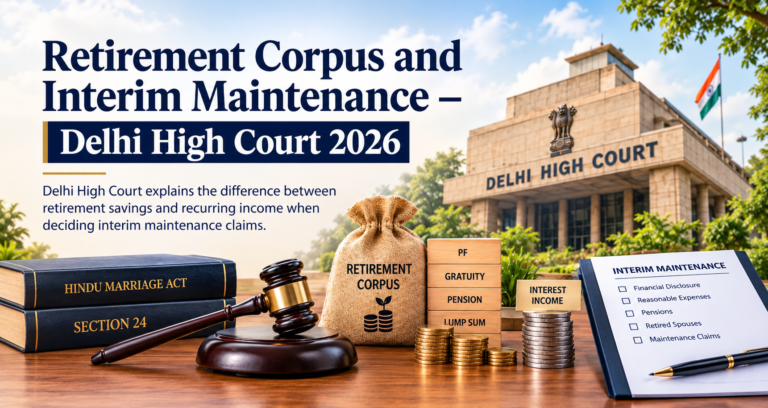
Interim Maintenance (Section 24, Hindu Marriage Act)
Either spouse (in practice, usually the wife) may apply for maintenance pendente lite — maintenance during the pendency of the case. The court typically grants this within a few hearings and bases the amount on the respondent’s income and the standard of living during the marriage.
Interim Child Custody
If there are children, the court can pass interim custody and visitation orders early in the proceedings, without waiting for the final trial.
Injunctions
Courts can restrain a spouse from alienating or transferring matrimonial property, from leaving the country with children, or from approaching the petitioner in a threatening manner.
These interim orders are often as important to clients as the final decree itself, particularly in cases involving financial dependency or children.
Realistic Timelines: How Long Does Contested Divorce Take?
This is the question every client asks first. The honest answer is that contested divorce in India is slow — and the Delhi family courts, despite improvements, carry substantial backlogs.
| Stage | Approximate Time |
| Filing to first hearing | 4–8 weeks |
| Service of summons | 1–6 months |
| Filing of Written Statement | 1–3 months |
| Framing of issues | 1–3 months |
| Mediation | 1–4 months |
| Evidence (complete) | 1–4 years |
| Arguments | 2–6 months |
| Judgment | 1–6 months after arguments |
| Total (realistic estimate) | 2–7 years |
Cases at Saket Family Court, Dwarka Court, Rohini Court, and Karkardooma Court all move at different speeds. Saket Family Court and Karkardooma Court tend to have heavier matrimonial dockets; an experienced local lawyer who knows the individual bench is an asset.
What can shorten a contested divorce?
- Strong, well-documented evidence from the outset
- Willingness to explore settlement at mediation
- A lawyer who appears regularly and does not take unnecessary adjournments
- Converting to mutual consent divorce if the respondent eventually agrees (possible mid-proceedings)
What causes delays?
- Repeated non-appearance by the respondent
- Frequent changes of lawyer
- Adjournments sought on both sides
- Absence of key witnesses
- Appeals against interim orders
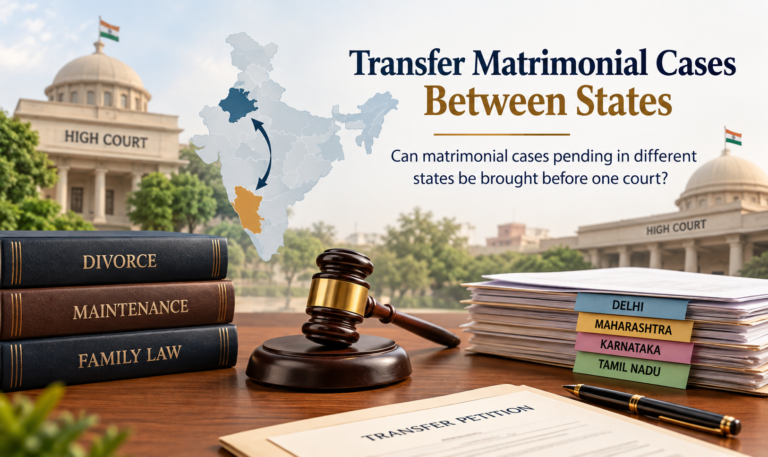
- Transfers to different courts
Cost of a Contested Divorce in India
Contested divorce is significantly more expensive than mutual divorce because the proceedings are longer and more complex.
Lawyer fees vary enormously based on experience, reputation, and the complexity of the case. Be wary of very low quotes — contested divorce requires sustained legal attention over years, and a lawyer who underquotes is likely to either withdraw or become inaccessible when you need them most.
At The Matrimonial Lawyers, we believe in transparent fee discussions at the first consultation. There should be no surprises.
Can a Contested Divorce Be Converted to Mutual Consent Divorce?
Yes — and in practice, this happens frequently. Parties who begin adversarially often reach a point, after months of litigation, where the emotional and financial cost of continuing outweighs the benefits of fighting. At that point, both sides may agree to convert the contested petition into a joint petition under Section 13-B.
The Supreme Court in Manish Goel v. Rohini Goel (2010) clarified that a contested petition cannot directly be converted to a mutual consent petition in the same proceedings — a fresh joint petition must be filed. However, the earlier proceedings can be withdrawn and a fresh mutual consent petition filed, which can then proceed on a much shorter timeline.
I have guided many clients through this transition, and it is often the wisest outcome: a clean end to the proceedings on negotiated terms rather than a judicial verdict that leaves one side feeling crushed.
Common Mistakes to Avoid in Contested Divorce
Having represented hundreds of clients across Delhi’s family courts, I see the same costly errors repeated. Avoid these:
Filing on the wrong ground. Choosing a ground you cannot prove — because it sounds dramatic or because a well-meaning relative suggested it — wastes years. File on the ground that your evidence actually supports.
Sharing too much on social media. Anything you post on Instagram, Facebook, or WhatsApp can be used against you in court. Photos of a holiday taken while you claim financial hardship, or messages that contradict your affidavit, have derailed many cases.
Using children as weapons. Denying visitation, alienating children from the other parent, or making allegations about the other parent’s parenting without evidence — courts see through this and it harms your own credibility, particularly in subsequent custody hearings.
Hiding or dissipating assets. Do not transfer property, close bank accounts, or move money in anticipation of the proceedings. Courts can reverse such transactions, and the conduct harms your case.
Ignoring interim proceedings. Some clients focus entirely on the final divorce and neglect interim maintenance or custody hearings. These interim orders govern your daily life for years — they deserve as much attention as the main trial.
Changing lawyers mid-stream. Every lawyer change sets the case back months. Choose your lawyer carefully from the start, and if genuine problems arise, consult a senior advocate before switching.
Frequently Asked Questions
How long does a contested divorce take in Delhi?
Realistically, between two and seven years depending on the ground, the evidence involved, the court, and whether the respondent cooperates. Cases that go to the High Court on appeal can take longer. An experienced lawyer can help manage timelines by avoiding unnecessary adjournments and pursuing mediation actively.
Can I get divorced without my spouse’s consent in India?
Yes. That is precisely what a contested divorce is. You do not need your spouse’s consent or cooperation to file or ultimately obtain a divorce — you need the court to be satisfied that the legal grounds for divorce are established on the evidence.
What is the strongest ground for divorce in India?
There is no universally “strongest” ground — the best ground is the one you can prove with your available evidence. In practice, cruelty (particularly mental cruelty) is the most commonly invoked and most frequently successful ground because it allows the court to consider a wide pattern of behaviour rather than requiring proof of a single dramatic event.
Can a contested divorce be converted to mutual consent divorce?
Yes. If both parties later agree to separate amicably, a fresh joint petition for mutual consent divorce can be filed. The contested petition is then withdrawn. This is often the most efficient outcome once both sides have had time to reflect — or once the financial and emotional cost of fighting becomes clear.
Conclusion
Contested divorce is not a decision to take lightly — but when a marriage has irretrievably broken down and one spouse refuses to acknowledge that reality, the law gives you the tools to move forward without their permission.
What the law cannot do is make it quick or painless. What an experienced matrimonial lawyer can do is make it strategic, focused, and as efficient as the system allows — protecting your interests on maintenance and custody while the main proceedings unfold, keeping you informed at every stage, and pursuing every legitimate avenue to bring matters to resolution.
If you are considering filing for contested divorce in Delhi — or if a petition has been filed against you and you need to understand your options — speak to a qualified matrimonial lawyer before taking any steps.
Consult Adv. Aman Chawla, Matrimonial Law Specialist, practicing before the Supreme Court of India, Delhi High Court, and all Delhi District Courts. Available for urgent matters, outstation clients, and online consultations across India.
Call: +91-8076836899 | WhatsApp | Email: info@thematrimoniallawyers.com Office: O-11A Basement, Jangpura Extension, New Delhi – 110014
Written by Adv. Aman Chawla. This article is for informational purposes only and does not constitute legal advice. Every case is fact-specific. Please consult a qualified lawyer before taking any legal action.
- Divorce Lawyer in Delhi
- Mutual Consent Divorce Lawyer
- Child Custody
- Maintenance Law
- Saket Family Court
- Karkardooma Court
- Domestic Violence
- 498A